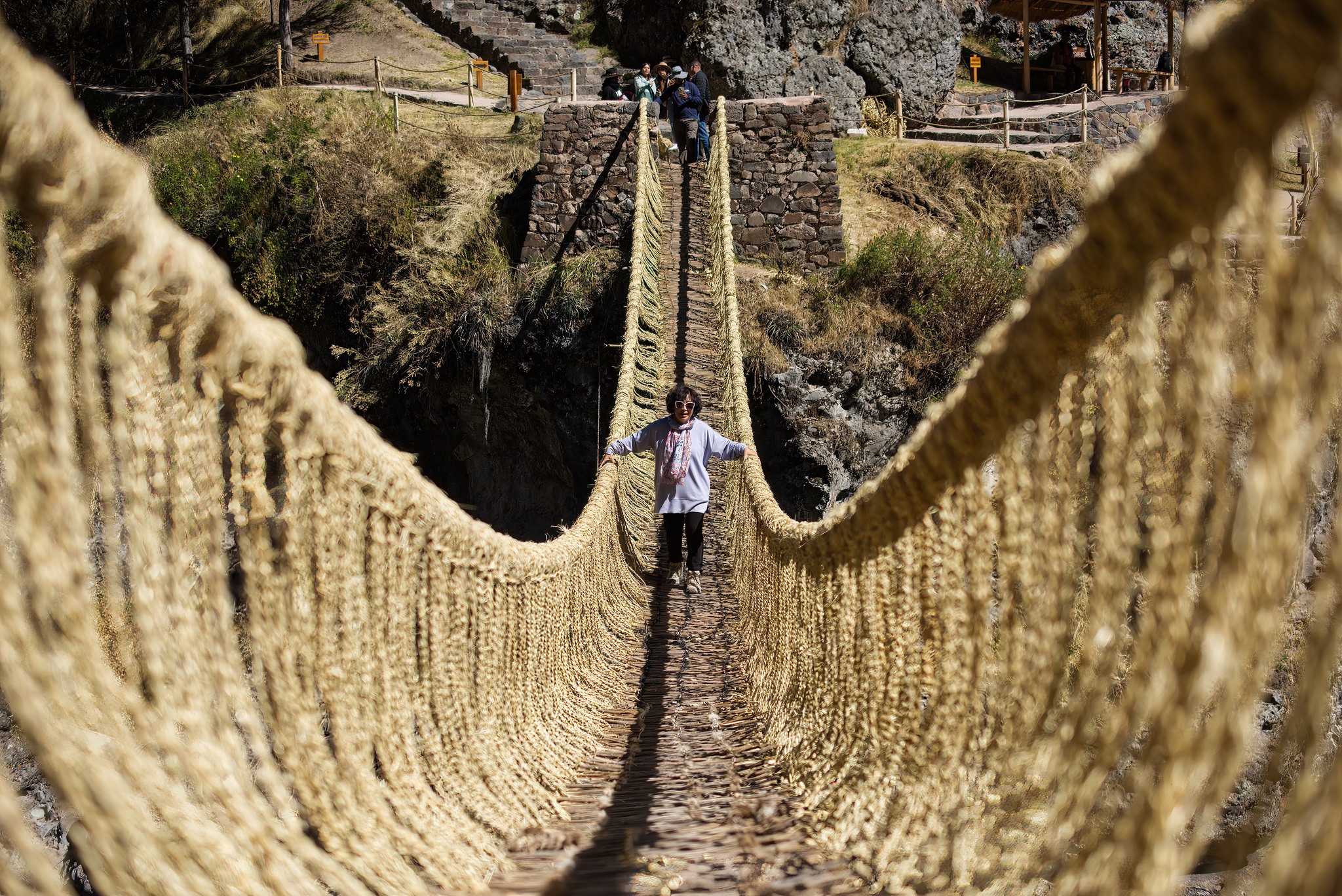
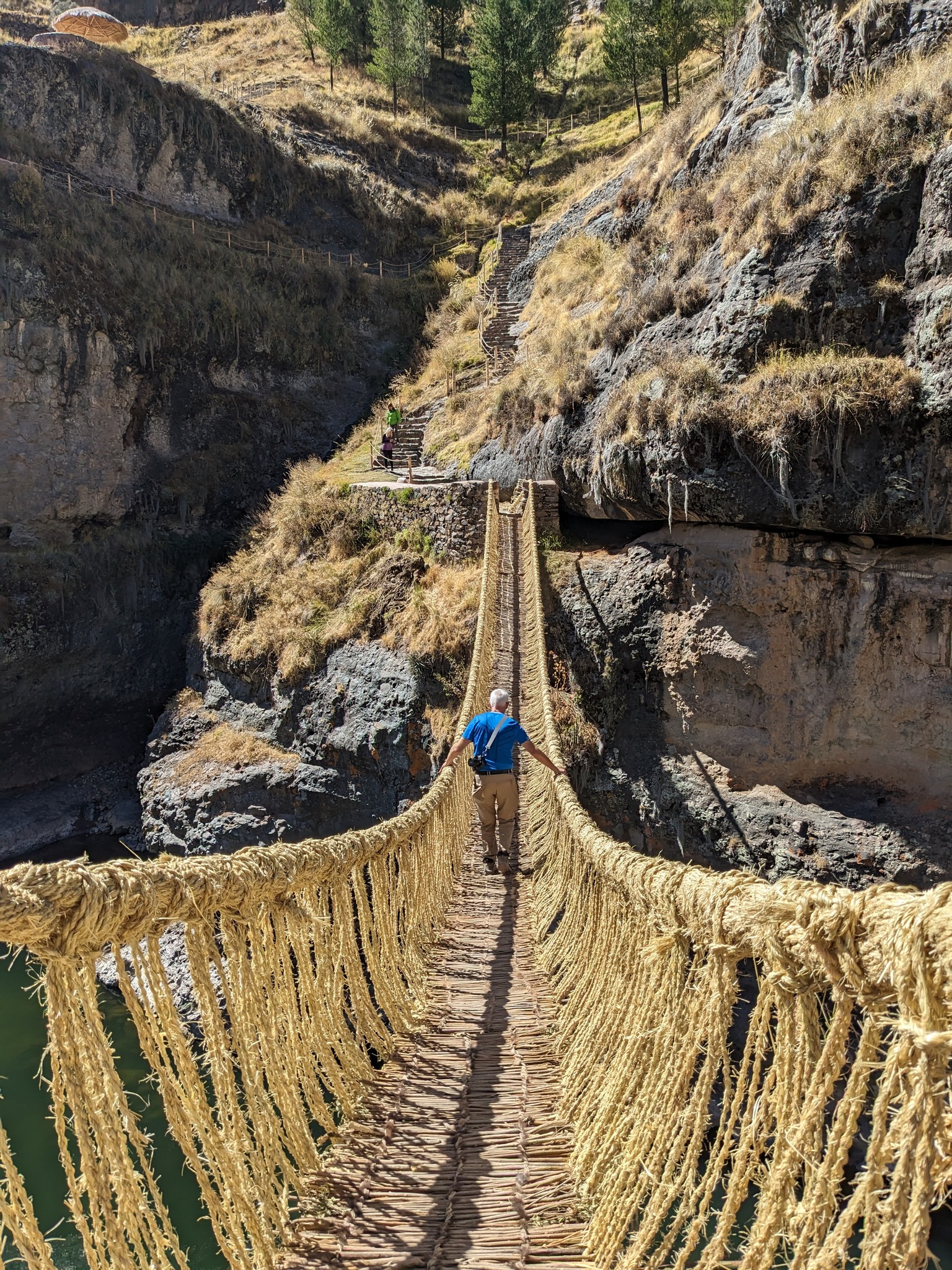
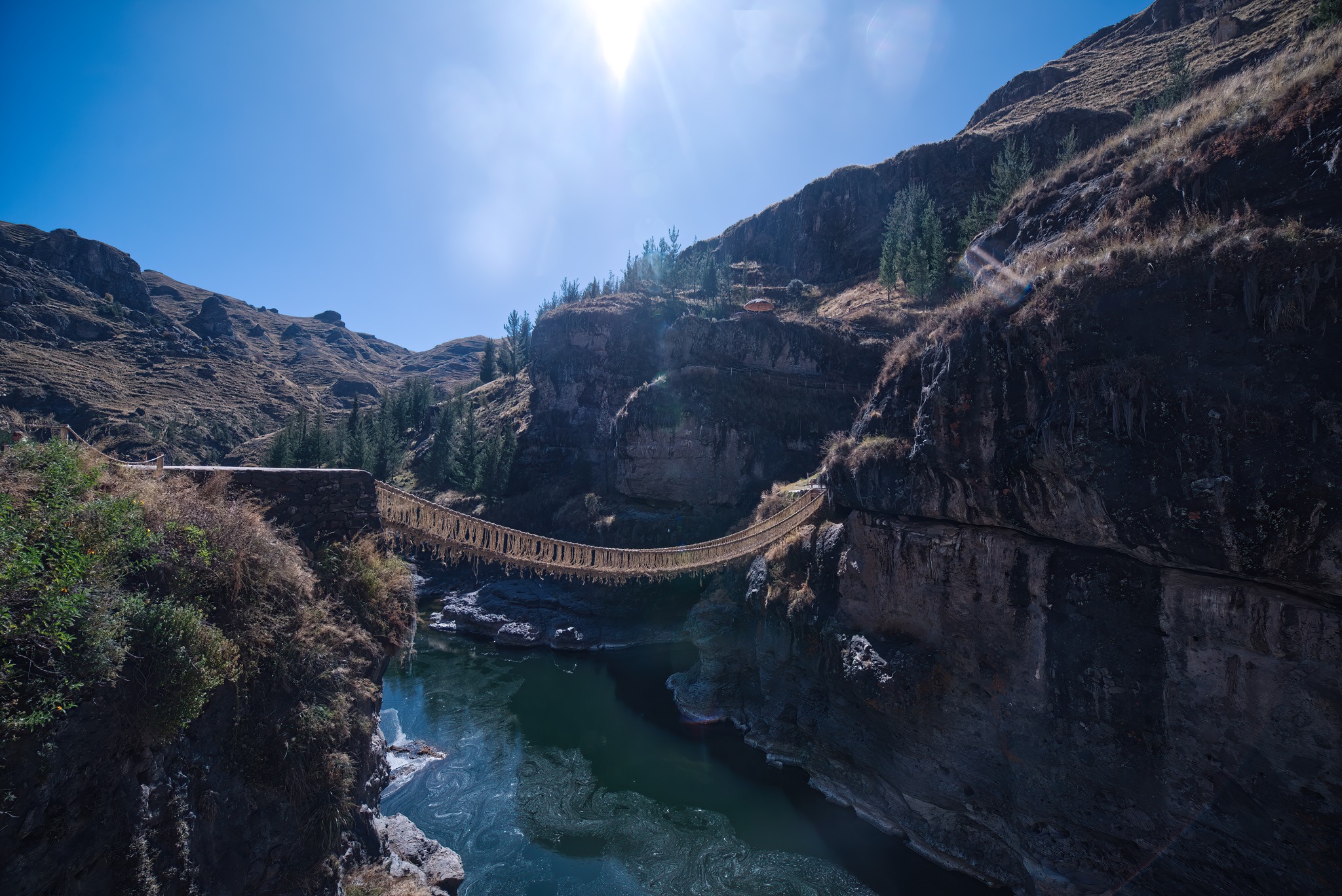
In the time of the Incas there was a vast network of roads known as the “Royal Road” (Qhapaq Ñan) that connected the Inca Empire. Because of the rugged terrain, however, many places had to be linked by suspension bridges made of plant fiber.
Q’eswachaka is the only such bridge that has been renewed from generation to generation by Cusco families right up to the present day. The bridge is located in the region of Cusco, over the Apurímac River, at 3,700 m.a.s.l. Nearly a thousand people from the communities around the bridge come together for four days to rebuild it.
Here is how the four days of tradition behind the rebuilding of Q’eswachaka unfold:
On the first day, the villagers of the communities go out to collect a tough plant fiber called ichu in Quechua. Once enough ichu has been gathered, the women twist this sturdy grass into cords for the bridge, and the men join the cords end to end and braid them into ropes.
On the second day, the structure of the old bridge is taken down, the stone anchors that hold the bridge are removed, and four ropes are set in place to form the base of the new bridge.
Tired but still going strong, on the third day the villagers finish the handrails and the walkway that the communities will cross. Finally, on the fourth day, they celebrate the rebuilding of the bridge with music and traditional dances, since the work has been regarded as a festive occasion since the days of their Peruvian ancestors.